Search

Content

0 comments

Studio Time


Time to christen Fiona’s brand new print room! We spent the day just experimenting and playing around with Fiona’s existing woodblocks. Some are traditional patterns from the Rajasthan area; others are more contemporary, with graffiti influences, script in both English and Hindi, geometrics, and more. Registration and alignment of the woodblocks proved difficult, particularly for certain woodblocks.

Two and three piece woodblocks are interesting, particularly in the method of application. Nandu, our lovely print assistant implored that the surface/outline print is to be applied first, then it’s background colour. I found it much easier however, to do the reverse – much to her amusement.

Cecilia highlighted the importance of having a test strip of fabric beside us at all times whilst printing. This test strip would not only test the quality of the print but also marked the start of any experimentation we were about to embark on. Often this test strip could provide inspiration in times of creative blocks – and so we created a communal test piece, in which we all would contribute to.
We developed a one metre repeat print of a single woodblock – just nice and simple to become accustomed to the printing. We also printed half a metre of a stripe – by alternating between two woodblocks.  


0 comments

Pushkar


Pushkar is considered one of the holiest towns in India. Just two hours drive from Jaipur, the town of Pushkar centres around a lake, is bordered by deserts and mountain ranges and is quite the little stunner.
The prettiest of cows stroll casually down the streets and marketplace, occasionally popping heads into people’s homes to score a snack. Each street you turn down has at least two temples – there are over 500 temples in this one town!

The most decorated camels awaited to take us on a sunset stroll around the villages in Pushkar to Fiona’s house. With henna paintings, coolourful necklaces and floral nose adornments, these camels can make you feel a bit underdressed. We cooked our first Indian dinner together and it’s easy to say we felt right at home.
0 comments

Indigo


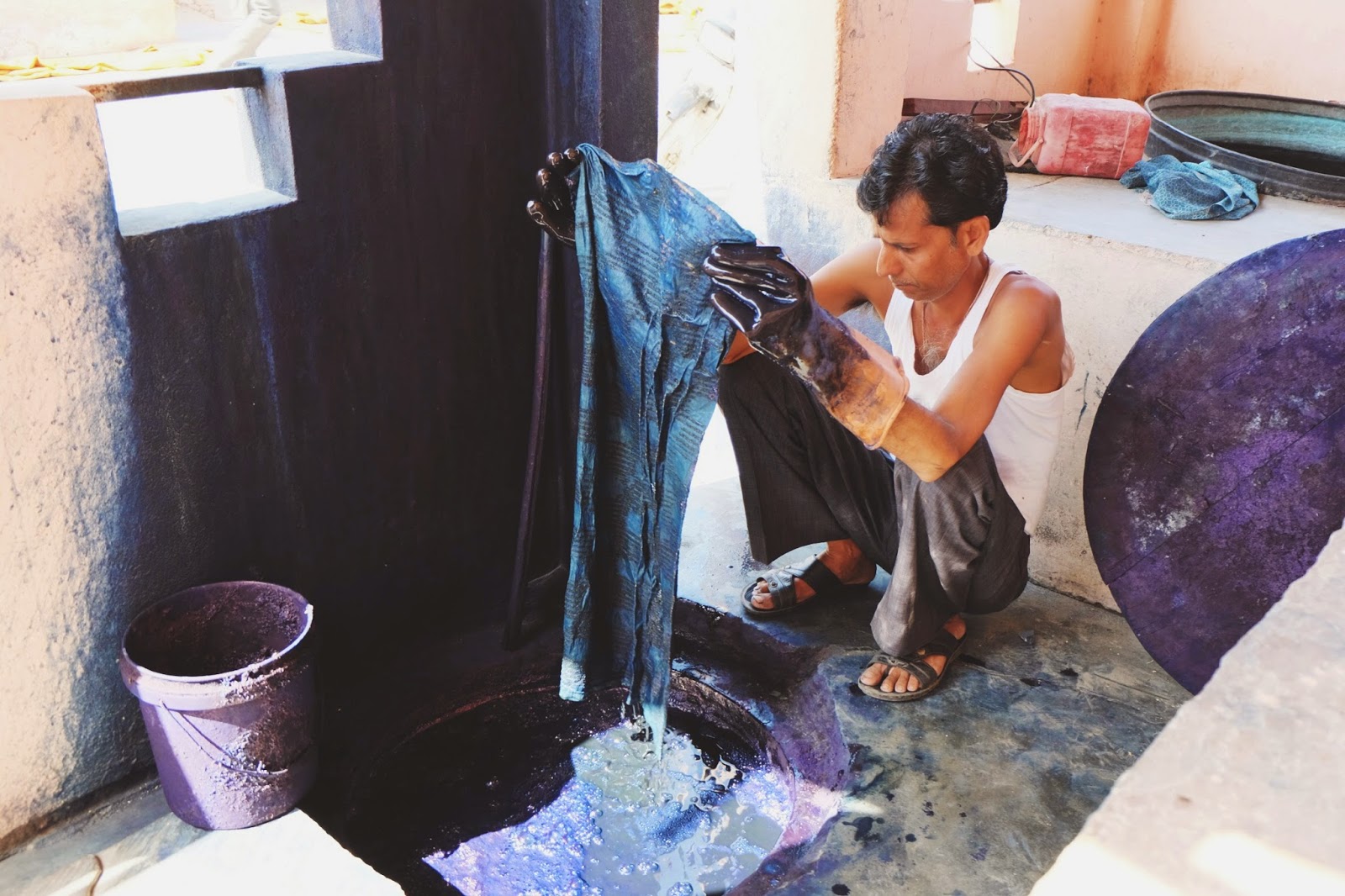
It just so happens that Mr Rumbabbagi has a 15ft deep indigo dye vat practically in his front yard. This vat is cleaned out every 5 or 6 years, maybe, and bubbles over with thick oily blue froth – definitely had some cool voodoo cauldron vibes going on.

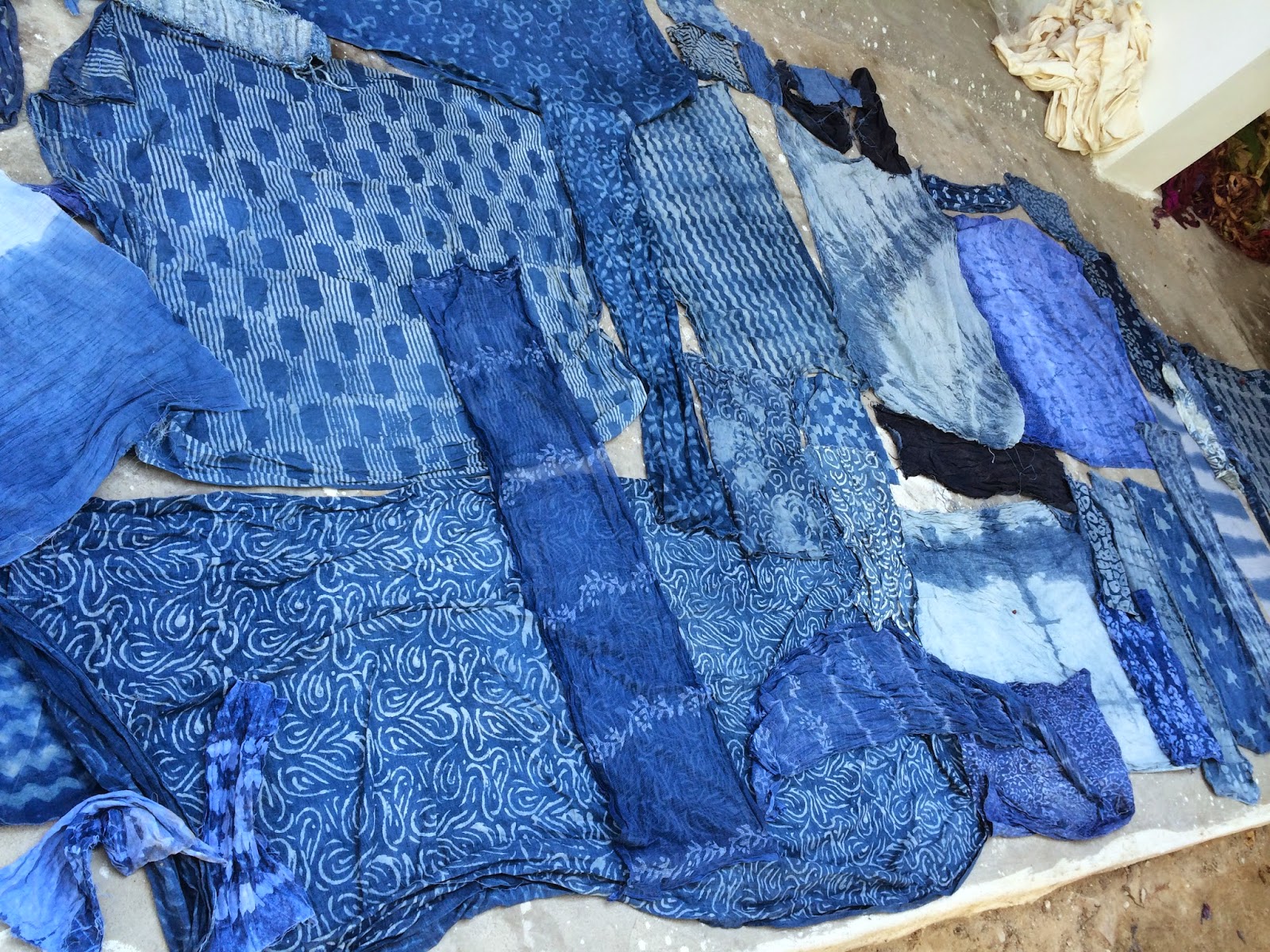
We prepared a few pieces of both plain and mud block-printed fabrics using shibori ties and left some pieces unchanged. The dried preprinted mud designs will act as a resist to the indigo dye – working in a similar way to batik. The fabric pieces are dipped into the dye vat, the more times - the darker the wash, and left to dry out on the street, with a watchful eye for any curious walkabout cows.


0 comments

Paint it Black


Just 40mins drive outside of Jaipur is the town Bagru. Bagru is known for it’s concentrated community of artisans that specialize in Ironblack printing and also indigo mud resist dyeing.
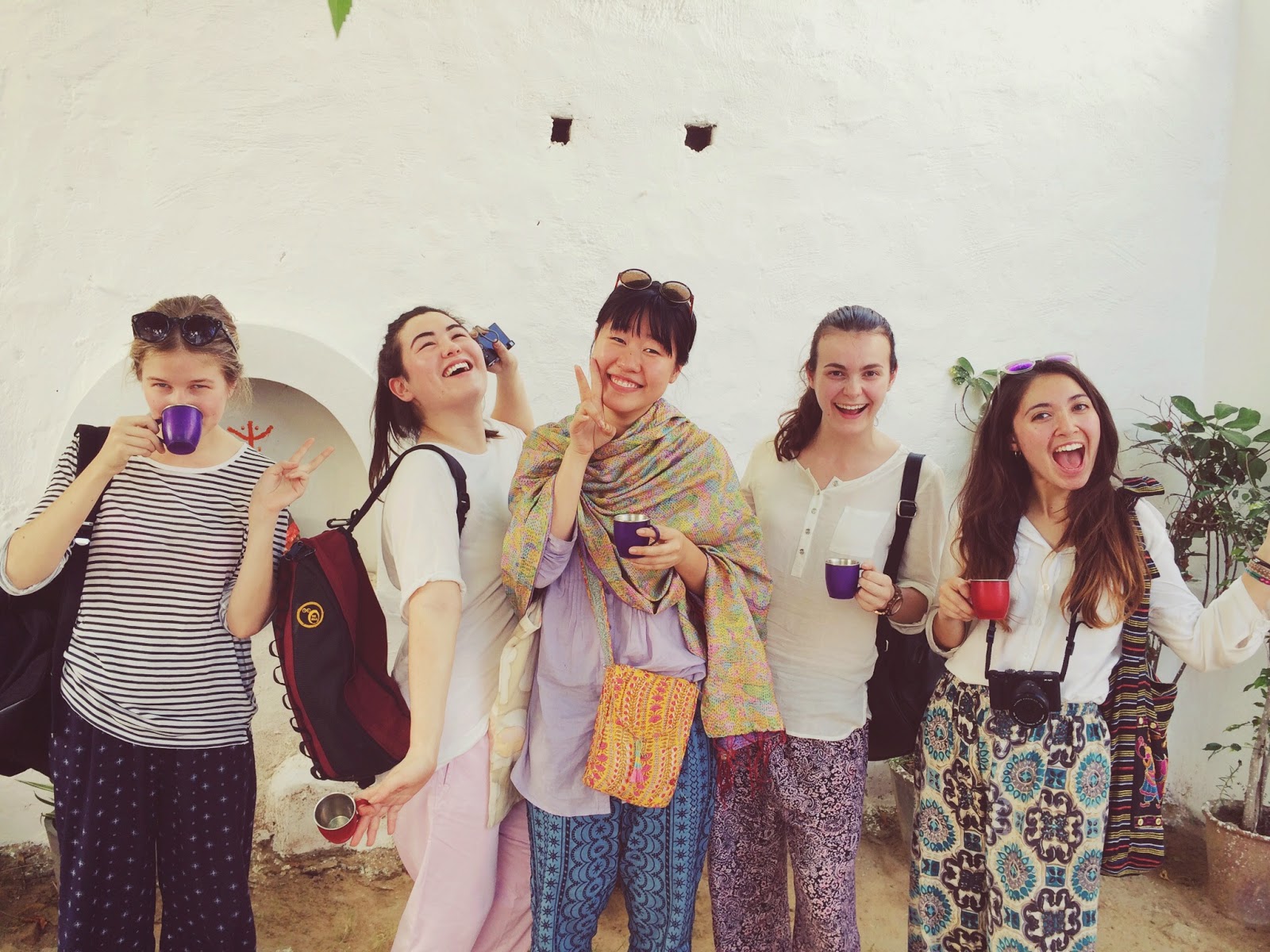
The coolest guy on the block, Mr Rumbabbagi gladly, yet still a tad nervousness, let a whole bunch of fashion kids into his home studio. Upstairs is his printing studio, currently undergoing renovation (as is everything in India) with large printing tables set up and ready to go.
Once prized by royalty or the very wealthy, Iron Black printing produces the blackest of blacks upon cloth. Fabric is first treated with a mordant of harda – fruit of the Myroballan tree. Better harda than original mordants of camel or goat dung. To create the Iron Ink, scrap pieces of iron are soaked with gur (indian sugar cake). After fermenting for 8 to 12 days it is mixed with tree gum and water to create a printing ink. Ingenious really.
Mr Rumbabbagi has a beautiful collection of traditional and contemporary woodblocks, our first play around with block printing was so much fun. Trying to figure out the registration and repeat of the blocks; the right amount of pressure needed from a martial arts style strike on the block; the bounce of the block upon the printing tray – all a big learning curve.


0 comments

Jah Mahal


The Jal Mahal is an island palace that sits in the middle of Man Sagar Lakein Jaipur. Built sometime in the 1700s, it was once deemed a ‘pleasure palace’ for the Maharaja Sawai Jai Singh, ruler of the kingdom of Amber (now Jaipur), who used the palace like a summer home. The palace is currently in restoration but not yet officially open for free public viewing.

The palace is incredibly stunning, from the dragon headed wooden boat ride to the solid marble columns that hold each floor, to the hand painted ceilings within the rooftop gazebos. Environment restoration has also been taken into account to with proper water irrigation systems, removal of pollution, foliage clean up and introduction of fish, turtles and other org
It’s interesting to see the palace restored, not just to look merely presentable, but to its original grandeur – without a commercial intention involved.
Powered by Blogger.

Popular Posts

Search This Blog